

-
The purpose of policy
Introduce
What is policy?
Social policy includes laws and guidelines as well as government services that seek to ensure a good standard of living. Our job roles may also mean that we play an active role in these policy areas. Policy responds to social issues including inequalities and discrimination.
We are all recipients of policy in a number of areas such as:
- Education
- Health and wellbeing
- Income
- Housing
- Employment
Children and families are at the heart of much social policy. Key examples include the Early Years Foundation Stage.
Policy can ensure that people get the best support available and quality of provision. It may help us in our everyday working lives to meet people’s needs. In this topic, we will explore:
- Equality act
- SEND code of practice
- Inclusive Education
- EYFS Framework
- Ordinarily Available Provision (known as Ordinarily Available Inclusive Provision in Greater Manchester)
Develop
Policy is important to early years practitioners because it shapes day to day work from safeguarding and curriculum to professional conduct and the wellbeing of children and families. Here are the key reasons:
- Protecting children’s rights and welfare: Policies such as safeguarding frameworks, health and safety rules, and anti discrimination legislation are designed to ensure that children are kept safe, treated fairly, and given equal access to learning opportunities. Policies support safe practice, identify concerns, and take appropriate action when needed.
- High quality practice: Policies like the Early Years Foundation Stage (EYFS) set clear standards for practice across all early years settings. This means that no matter whether a child goes to a childminder, nursery, or school, they are offered: age appropriate learning opportunities; consistent expectations for behaviour and development and practitioners who work to shared professional standards.
- Safety and quality assurance standards: record keeping, inspections, staff ratios and qualifications.
- Partnerships with families: policy supports practitioners to respect cultural diversity and home learning environments and involve families in decision making. This strengthens relationships and supports holistic child development.
- Inclusive and equitable practice: Policies and legislation promote reasonable adjustments and inclusive learning environments.
- Support for professional identity and development: this sets standards for early years practitioners and establishes responsibilities. The frameworks that follow help practitioners develop confidence and competence.
Government priorities such as improving school readiness, reducing inequalities, or supporting family wellbeing, are reflected in policy.
Reflect
What policies are you aware of that you adhere to in your work?
Students mustMark as done -
The Equality Act 2010
Introduce
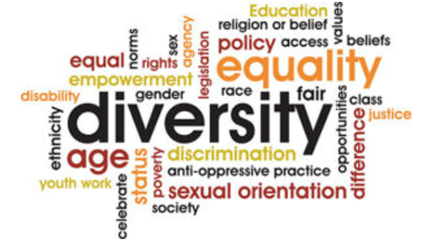
The Equality Act 2010 is law that brings together anti-discrimination policy. It provides legal protection from discrimination in specific settings and in wider society. The Act focuses on ‘protected’ characteristics.
Protected characteristics
- Age;
- Disability;
- Gender;
- Marriage and civil partnership;
- Pregnancy and maternity;
- Race;
- Religion or belief;
- Sex;
- Sexual orientation.
How does this work in practice?
Example: Education
Disabled children must not be treated less favourably than other children in relation to:
- Admissions and exclusions
- Education and associated services including:
-
- The curriculum;
- Teaching and learning;
- The serving of meals;
- Activities including sports and trips.
Develop
Watch this video by the Equality and Human Rights Commission for an overview of the Equality Act 2010.
Reflect
- ‘You’re disabled under the Equality Act 2010 if you have a physical or mental impairment that has a ‘substantial’ and ‘long-term’ negative effect on your ability to do normal daily activities.’
- Physical or mental impairment includes sensory impairments and hidden impairments. In the Equality Act, ‘substantial’ means more than minor or trivial and ‘long-term’ means a year or more
Source: Guidance on the Equality Act, 2010
Let’s interrogate this definition:
- Think back to the social model. What does ‘normal’ mean? Might this be an issue?
- Think of the ages of the children you are working with. How might timeframes like ‘a year’ present difficulties?
Students mustMark as done -
SEND Code of Practice
Introduce
The Special Educational Needs and Disability (SEND) Code of Practice is statutory guidance for organisations working with and supporting children and young people who have special educational needs or disabilities in England. It was implemented in September 2014 and covers a wide range of topics, including:
- Legal requirements and duties of local authorities, health bodies, schools, and colleges.
- Identification of needs and the support required.
- Education, Health, and Care (EHC) plans and how they are developed and reviewed.
- Collaboration between education, health, and social care services.
- Inclusive practice and removing barriers to learning.
- Support for transition to adulthood.
The Code is designed to maximise support for children and young people with SEND. Please see for more: SEND code of practice
Develop
What is the SEND code of practice? This video provides a handy explainer.
The SEND code of practice emphasises:
- the views, wishes and feelings of the child or young person, and the child’s parents
- the importance of the child or young person, and the child’s parents, participating as fully as possible in decisions, and being provided with the information and support necessary to enable participation in those decisions
- the need to support the child or young person, and the child’s parents, in order to facilitate the development of the child or young person and to help them achieve the best possible educational and other outcomes, preparing them effectively for adulthood (ASCL, 2016)
- Birth to work and ‘independence.’
It takes a ‘staged’ approach so that support includes:
- ‘Reasonable adjustments’ (we will discuss this further on)
- ‘SEND status’ (targeted intervention)
- Education health and Care Plans (EHC Plans) (external support).
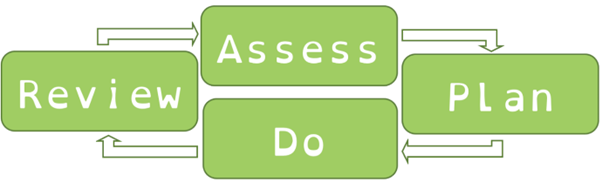
The Graduated Approach is an approach to SEND support within mainstream settings. It is recommended that settings assess children’s need and then provide appropriate support. There are four stages: Assess, Plan, Do, Review.
It is not a one off process and is recommended to be a cycle to be repeated. Through this, assessments can address children’s strengths and needs and adapt as these change or develop.
- Assess: Practitioners (along with the SENCO) are responsible for carrying out an assessment of children’s needs
- Plan: Where SEND Support is required, parents/carers should be notified. All educators, practitioners and support staff should be made aware of a child’s needs, support offered and any specific strategies required.
- Do: The planned interventions should be implemented.
- Review: Reviews should be carried out and feed back into child need assessments. The Code of Practice recommends settings meet with parents three times per year.
The graduated approach can be instigated at any time and should always involve parents. Link here:
Example: Trafford Directory | Trafford Early Years SEND Graduated Approach for Practitioners
Reflect
‘’Children have special educational needs if they have a learning difficulty which calls for special educational provision to be made for them. Children have a learning difficulty if they have a significantly greater difficulty in learning than the majority of children of the same age or have a disability which prevents or hinders them from making use of educational facilities of a kind generally provided for children of the same age in local schools.”
‘SEND Code of Practice 0-25’, DfE, 2015
Children with SEND are said to require something ‘additional to’ or ‘different from’ that offered to other pupils.
What are the issues with age related expectations of children?
Thinking back to the social model of disability, which focuses on the environment, a definition which refers to use of educational facilities may present difficulties. What if facilities aren’t fully compliant? Are there ways that your own service could improve how it meets all children’s needs?
Students mustMark as done -
Inclusive Education
Introduce
Inclusive education is an approach where learners, regardless of ability or disability, learn together according to age. It promotes equal access to educational opportunities, though there may be teaching methods tailored to individual need. Inclusive education should offer a supportive environment where diversity is valued. Parents, educators and specialists should work together. Inclusive education is considered to benefit all learners.

Develop
Görranson & Nilholm (2014) identify 4 definitions of inclusion:
- Placement definition – inclusion as placement of children with disabilities/in need of special support in general settings
- Specified individualised definition – inclusion as meeting the social/educational needs of children with disabilities/those in need of special support
- General individualised definition – inclusion as meeting the social/educational needs of all children
- Community definition – inclusion as the creation of communities with specific characteristics (which could vary between contexts)
The Early Years (EY) SEND Review Tool is a structured self-evaluation framework which aims to support early years settings (whether private, voluntary, independent, and maintained early years providers) evaluate and improve their provision for children with Special Educational Needs and Disabilities (SEND). Developed by Achievement for All and for the Department for Education, it is designed to support inclusive practice and helps settings identify strengths and areas for development in a way that embeds inclusive values.
Refer to Early-Years-SEND-Review-Guide.pdf for further details.
Reflect
Thinking about your practice, what would be required to be inclusive?
Students mustMark as done -
EYFS Framework
Introduce
The policy that guides you most in your work everyday work is the Early Years Foundation Stage, the ‘EYFS’. The Early Years Foundation Stage (EYFS) is the statutory framework that sets the standards for the learning, development, and care of children from birth to five years old in England. It outlines the principles that shape highquality early education, ensuring that all children are supported to learn, thrive, and develop key skills across seven interconnected areas of learning. The EYFS provides guidance for early years practitioners across nurseries, preschools, and reception classes, helping them to create nurturing, stimulating environments and to assess children's progress in meaningful, developmentally appropriate ways. The most up to date EYFS statutory framework is published by the Department for Education and can be accessed here. Early years foundation stage (EYFS) statutory framework - GOV.UK
The EYFS establishes standards for the learning, development, and care of children from birth to 5 years. It emphasises a holistic approach to early childhood education, based on the following domains. These are described in more detail below:
- Communication and Language
- Physical Development
- Personal, Social, and Emotional Development
- Literacy
- Mathematics
- Understanding the World
- Expressive Arts and Design
Develop
Communication and Language
Communication and Language is one of three prime areas of the EYFS and offers a foundation for all later learning. It focuses on developing children’s ability to listen, understand, and communicate effectively. Through rich conversations, storytelling, songs, and opportunities for talk, children learn to express ideas, follow instructions, and build a growing vocabulary. High quality adult–child interactions are essential for supporting children to explore language, respond to others, and develop confidence in communication.
Physical Development
Physical Development supports children in developing both gross motor (large movements like running, climbing, balancing) and fine motor skills (precise movements used for writing, cutting, and self care). This area emphasises the importance of health, physical activity, independence, and self care routines. Through active play, handling tools and materials, and developing control and coordination, children gain the skills needed for everyday tasks and later academic learning.
Personal, Social, and Emotional Development (PSED)
PSED is another prime area and is vital for children’s well being and ability to thrive in group settings. It focuses on helping children understand themselves and others, manage emotions, build positive relationships, and develop social skills such as turn taking and cooperation. Children learn to develop resilience, confidence, and independence, forming secure attachments and healthy self-esteem—key building blocks for future success.
Literacy
Literacy supports children in developing early reading and writing skills. It includes fostering enjoyment of reading, encouraging mark making, recognising print, learning phonics, and understanding that text carries meaning. Children engage with stories, poems, rhymes, and information books to build comprehension and language structures. Opportunities for purposeful writing—such as making lists, labels, or simple stories—help children learn to communicate through written language.
Mathematics
Mathematics introduces children to concepts such as number, shape, space, and measure. Practical experiences such as counting objects or exploring shapes help children develop an early understanding of mathematical ideas.
Understanding the World
Understanding the World helps children make sense of the environment, community, and wider world. It includes exploring nature, investigating materials, learning about people and communities, and understanding technology. Encouraging children to notice, ask questions, and explore helps them develop knowledge of how things work and fosters early scientific thinking and cultural awareness.
Expressive Arts and Design
Expressive Arts and Design encourages children’s creativity, imagination, and artistic expression. Children explore colour, texture, music, sounds, movement, role play, and a wide range of materials and techniques. Through creative experiences, they learn to experiment, share ideas, and express their thoughts and feelings in varied and imaginative ways. This area supports cognitive flexibility, problem solving, and emotional expressionStudents mustMark as done -
Ordinarily Available Inclusive Provision
Introduce
Inclusive practices and support that all schools and educational settings offer all children -including those with Special Educational Needs and Disabilities (SEND) – are known as Ordinarily Available Provision. Such provision is designed to ensure that all children can engage and thrive within settings. GM has it’s own version of OAP, which is ‘OAIP’ – Ordinarily Available Inclusive Provision.
There is a Greater Manchester version of the OAIP that most GM Local Authorities align their versions to.
Watch: EYSEND National Seminar – Ordinarily Available Provision in the Early Years
Explore the resources at the Autism Education Trust
Develop
Manchester Primary Ordinarily Available Provision | Help & Support Manchester
Watch this overview of Ordinarily Inclusive Provision by Nuala Finegan, Senior School Quality Assurance Officer for SEND, Manchester City Council
Reflect
- What are some common barriers to children’s development in your setting?
- What works in your setting/practice?
- How do you currently identify children who may benefit from Ordinarily Available Inclusive Provision?
- Are there children whose needs might not be addressed because they do not have a formal diagnosis?
- Are there any adjustments you could make in your practice that would benefit all children, not just those who have an identified need?
- Are there any ways you could adapt your practice to respond to support sensory, physical, or emotional needs?
- Is there anything you are excited to try?
Students mustMark as done
-
Children and families sit at the centre of modern social policy, with interventions designed to strengthen early development, reduce inequalities, and provide integrated support throughout childhood.
This topic will familiarise you with policies, frameworks and guidance that can support your work with children and their families. Key policies: The Equality Act, SEND Code of Practice, Inclusive Education, EYFS Framework and Ordinarily Available Inclusive Provision (known as Ordinarily Available Provision in Greater Manchester).